Medical Coding vs Medical Billing: CPC vs CPB : Which Should You Choose?
By CPCPrep Team ·

Medical Coding vs Medical Billing: CPC vs CPB : Which Should You Choose?
What medical coders actually do
Here is what actually happens: a medical coder receives clinical documentation (physician notes, operative reports, discharge summaries) and assigns standardized codes. CPT for procedures, ICD-10-CM for diagnoses, HCPCS for supplies and drugs.
The output is a coded claim ready for billing. Coders do not submit claims, follow up on denials, or contact insurance companies. Their job ends at code assignment. That distinction matters when you are choosing a career path: the clinical and analytical work is on the coding side.
Specialty coders (cardiology, oncology, orthopedics) tend to earn more because the coding is more complex. A cardiology coder working catheterization and stent cases needs to understand the clinical documentation in a way a general biller does not.
What medical billers actually do
Let’s be real about this: billing and coding are often lumped together in job titles, but the actual work is different.
A medical biller takes the coded claim and submits it to payers: Medicare, Medicaid, commercial insurance. They track claim status, work denials, post payments, and manage accounts receivable. The job requires understanding of payer rules, reimbursement schedules, and patient balance management.
Small practices often combine both roles into one job. In those settings, you will code and bill. In larger health systems and revenue cycle companies, the two roles are usually separate.
Some billers also code (hybrid roles are common). But the core skill set for billing leans toward finance and process management, not clinical knowledge.
CPC vs CPB: the certification difference
CPC (Certified Professional Coder)
The CPC is the standard credential for outpatient coding. 100 questions, 4 hours, open-book. Covers all 17 medical coding domains: CPT, ICD-10-CM, HCPCS, modifiers, E/M guidelines. Average pass rate: 50-65% on first attempt.
The exam is difficult because it requires clinical knowledge. You need to understand what procedures are, not just what the codes say. Reading an operative report and pulling the right codes requires knowing what the surgeon actually did.
CPB (Certified Professional Biller)
The CPB covers billing regulations, payer rules, claim submission, collections, compliance, and practice management. 135 questions, 5 hours and 40 minutes. Average pay: $45,000-$58,000.
The content is less clinical and more process-oriented. Insurance contract basics, appeals processes, HIPAA, revenue cycle management.
Which is harder to pass?
Both are real exams. The CPC is harder for people who struggle with clinical knowledge (anatomy, procedure descriptions). The CPB is harder for people who struggle with regulatory and financial processes. Neither is easy to pass without preparation.
Salary comparison: coding vs billing
| Role | Entry-level | Mid-level | Senior/Specialized | Remote |
|---|---|---|---|---|
| Medical Coder (CPC) | $35K-$42K | $55K-$70K | $70K-$90K | Yes (after 1-2 yrs) |
| Medical Biller (CPB) | $32K-$40K | $45K-$58K | $60K-$72K | Yes (more accessible entry) |
Coding pays more, especially in specialty roles. A senior cardiology or oncology coder with a few years of experience can reach $80,000-$90,000. Billing roles cap lower, though senior revenue cycle managers in large health systems can approach $65,000-$72,000.
Billing may be easier to get into at the entry level without experience, because the documentation is more standardized. Coding entry-level roles often ask for some clinical background or certification before hiring.
Which role is better for remote work?
Both can be done remotely, and most postings in 2026 offer remote options. A few differences worth knowing.
Billing remote roles are sometimes easier to land at the entry level because the work is less dependent on interpreting clinical notes. A biller working denials mostly needs access to the practice management system, not the EHR.
Coding remote roles typically require VPN access to the EHR and some demonstrated ability to interpret clinical documentation. Most employers want 1-2 years of in-person experience before offering remote. It is not a hard rule, but it is common.
The case for starting with coding
Here’s what most guides won’t tell you: many people who end up doing both learn coding first, then billing. It makes sense in practice. Coding gives you the clinical foundation that makes you a better biller later.
A biller who understands coding can identify denial root causes faster. They know whether a denial is a documentation problem, a coding error, or a payer issue. That knowledge is worth real money in a revenue cycle role.
If you are on the fence: learn coding. Add billing knowledge as you go. The CPC certification is the harder credential to earn and the one that opens more specialty roles long-term. If medical terminology is the part you are most unsure about, the medical coding terminology guide covers the 100 roots and suffixes you need to decode clinical documentation from day one.
Starting with coding: take the free CPC readiness test to see where you stand.
Sources: AAPC CPC and CPB exam guides, ZipRecruiter Medical Biller vs Medical Coder salary comparison, BLS Medical Records job outlook.
Related: Medical Coding Salary (Remote) | CPC Exam Prep Guide | Medical Coding Certification Cost | Career Change to Medical Coding | Remote Medical Coding Jobs
Sources & References
Frequently Asked Questions
Does CPC or CPB pay more? ▼
CPC coders typically earn $5,000-$10,000 more annually than CPB billers. Specialty coders (cardiology, oncology) at senior level earn $70,000-$90,000. Senior billers in revenue cycle management roles can approach $65,000-$72,000.
Is medical coding harder than medical billing? ▼
CPC certification is generally considered harder than CPB. It requires clinical knowledge (anatomy, procedures, coding guidelines) that billers do not need. The CPB exam covers more regulatory and financial content.
Do I need an AAPC membership for both CPC and CPB? ▼
Yes. AAPC membership is required to take either exam at member pricing. Non-member exam fees are significantly higher.
Can I do both medical coding and billing? ▼
Yes. Many coders and billers work in hybrid roles, particularly in smaller practices. AAPC offers specialty credentials that bridge both areas.
Test Your Knowledge
5 quick questions on this topic.
Related Articles

Can You Become a Medical Coder with No Medical Background? (2026 Reality Check)
Yes, you can become a medical coder without a medical degree or clinical experience. Here is what it actually takes: the CPC path, the timeline, and what most guides won't tell you.
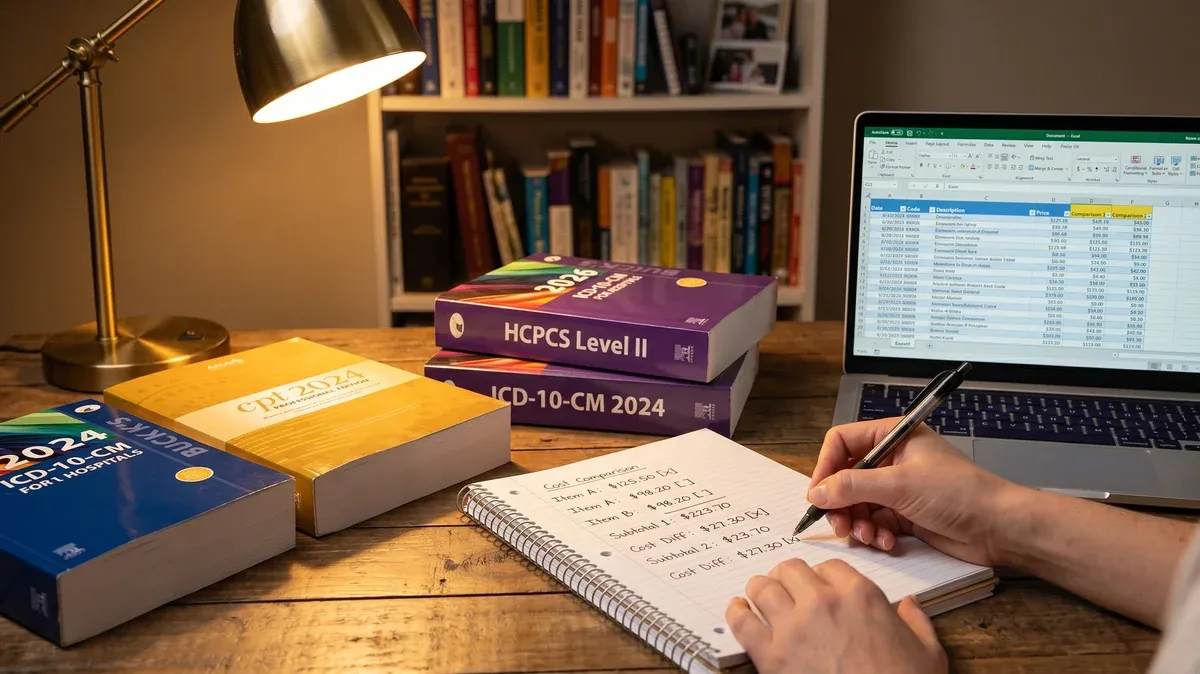
Medical Coding Certification Cost in 2026: True Breakdown (Bootcamp vs Self-Study)
How much does it actually cost to get CPC certified? AAPC membership, exam fees, study tools, and bootcamp costs compared. Plus: the ROI math that makes self-study the obvious choice for most.

Remote Medical Coding Jobs in 2026: Companies Hiring, Salary, and How to Apply
Over 65% of medical coding positions now offer remote options. Here are the companies that hire remote coders, salary benchmarks, and what it takes to land a work-from-home coding role.
Ready to practice?
Test your CPC knowledge with real exam-style questions. Free to start.
Start Blitz Mode