Can You Become a Medical Coder with No Medical Background? (2026 Reality Check)
By CPCPrep Team ·

Can You Become a Medical Coder with No Medical Background? (2026)
The short answer (and why it is complicated)
Here’s the honest answer: yes and no.
The CPC exam has no formal prerequisites. No degree required, no clinical hours required. You can sit the exam after self-study. What IS required is actually learning the material.
Medical coding means translating clinical documentation into codes. That requires understanding anatomy, medical terminology, CPT guidelines, ICD-10-CM conventions, and payer rules. None of this requires a medical degree. All of it requires focused study.
The “no background” part is true in a narrow sense: you do not need to have worked in healthcare. The honest version: you will still need to learn a meaningful amount of clinical vocabulary and body system knowledge before the exam makes sense. That is not a barrier. It is just the job.
What you actually need to learn
Medical terminology and anatomy
This is the part most career-change guides gloss over. Medical coding is not data entry. You read physician notes, operative reports, pathology findings, and discharge summaries. If you do not know what “laparoscopic cholecystectomy” means or which organ system it involves, you cannot code it correctly.
The good news: you learn this through exam prep, not through nursing school. AAPC’s CPC curriculum covers body systems and terminology specifically because most candidates are not clinicians. It is a defined, learnable body of knowledge. It just takes time.
The three code systems (CPT, ICD-10-CM, HCPCS)
CPT codes describe procedures and services. ICD-10-CM codes describe diagnoses. HCPCS Level II codes describe supplies, drugs, and non-physician services.
On every claim you will ever touch, you are assigning codes from at least two of these. The CPC exam tests all three. You need to know not just what the codes mean, but how to apply the guidelines: sequencing rules, bundling rules, modifier usage, payer-specific conventions.
Coding guidelines and conventions
This is where it gets dense. Each code system has its own set of rules. ICD-10-CM has Excludes1 and Excludes2 notes. CPT has parenthetical instructions and add-on codes. The Official Guidelines for Coding and Reporting run over 100 pages for ICD-10-CM alone.
You will not memorize all of it. The CPC is open-book. What you need is fluency: the ability to find the right section, read the guideline correctly under time pressure, and apply it to a clinical scenario. That fluency takes months to build.
Does prior healthcare experience help?
Let’s be real about this: it makes the learning curve shorter, not different.
A former nurse already knows anatomy and clinical terminology. A front-desk administrator understands workflow and payer basics. A complete outsider learns the same material, it just takes a bit longer.
The CPC exam does not test your clinical judgment. It tests your ability to apply coding guidelines correctly. A physician who sits the exam cold often scores worse than a motivated self-study candidate who spent four months on prep, because the physician knows the medicine but not the coding rules.
What healthcare experience gives you is context. You understand what a procedure note looks like. You know what an operative report includes. That context helps you read scenarios on the exam faster. It is an advantage, but not a prerequisite.
The fastest path: CPC certification without a degree
AAPC membership and exam (no degree required)
Here’s where it gets practical. AAPC membership runs $222 per year. The CPC exam fee is $399 for members. Total mandatory cost: $621. No transcripts, no prerequisite courses, no clinical hours.
You register, study, sit the exam. That is the entire official pathway.
AAPC does recommend having 2 years of experience before sitting the exam, but this is a recommendation, not a gate. Thousands of candidates sit with zero prior experience each year. Pass rates for first-timers run around 50-70% depending on prep quality.
Self-study vs formal program
Self-study path: the AMA CPT codebook ($120), the AAPC ICD-10-CM codebook ($85), a study guide ($50-$100), and a practice tool. Total: $400-$600.
AAPC’s self-paced online program runs $1,699. It covers the same material with structured lessons, quizzes, and a codebook bundle included. Some candidates need that structure. Others move faster on their own.
There is no meaningful difference in pass rates between self-study candidates and program candidates when prep quality is controlled. The question is whether you can hold yourself accountable without a deadline.
Timeline: 3-6 months to exam-ready
Three months is aggressive but achievable if you study 2-3 hours per day. Six months is realistic for most candidates studying 45-60 minutes on weeknights and a few hours on weekends. Beyond six months often means momentum is the problem, not complexity.
The exam is five hours and forty minutes, open-book. Codebook navigation speed matters as much as rule knowledge. Build that fluency through timed practice, not just reading.
What the first job actually looks like
Here is what actually happens: entry-level coders with no prior experience typically start at $35,000-$42,000. That is the real range for in-person roles at clinics and physician offices. Not $60,000 remote right out of the gate.
Most coders start in person: multi-specialty clinics, physician group practices, outpatient surgery centers. After 12-18 months of building speed and accuracy, a large portion transition to remote roles. Some employers, particularly smaller physician groups and medical billing outsourcing companies, hire CPC-certified entry-level candidates directly into remote positions.
If I can do it, you can do it, but plan for the first year to be the experience-building phase. You will code under supervision. You will make errors. You will get faster. That is how it works for almost everyone who starts from zero.
The path to $55,000-$65,000 remote exists. It is just not the first stop.
Sources
- AAPC CPC certification eligibility: aapc.com/certifications/cpc
- Research.com: How to become a medical coder
- BLS Occupational Outlook Handbook: Medical Records Specialists
Ready to start? The CPC exam prep guide covers what to study and in what order. Or: start the free 20-question practice test, no background required.
For the full career change timeline and salary expectations, see the medical coding career change guide. To understand what medical terminology you will need to master, the medical coding terminology guide covers the 100 most important roots and suffixes with body-system context. For the real cost breakdown before you commit, the CPC certification cost guide walks through every line item from membership to codebooks.
Sources & References
Frequently Asked Questions
Can I get a job as a medical coder with no experience? ▼
Entry-level coding jobs exist but are competitive. A CPC certification significantly improves your chances. Most remote positions require either certification or 1-2 years of experience. Some employers hire entry-level in-person coders first, then transition them remote. Plan for the in-person route to be the more accessible starting point.
What is the quickest way to become a medical coder? ▼
The fastest path: join AAPC ($222), self-study with codebooks and a prep tool like CPCPrep for 3-4 months, sit the CPC exam, pass. Total: 4-6 months for motivated candidates. Going faster than that usually means skipping the timed practice, which catches up with you on exam day.
What is an entry-level medical coder? ▼
An entry-level medical coder assigns CPT, ICD-10-CM, and HCPCS codes to physician documentation, typically in a clinic or physician office setting. Most entry-level coders work under supervision until they develop speed and accuracy. The CPC is the standard entry-level certification for outpatient and physician office coding.
Do I need a degree to become a medical coder? ▼
No. The CPC exam has no degree requirement. Many successful coders are career changers who passed the exam after 3-6 months of self-study. A healthcare administration associate's degree can help but is not required. What matters to employers is the credential and the ability to demonstrate coding accuracy.
Test Your Knowledge
5 quick questions on this topic.
Related Articles
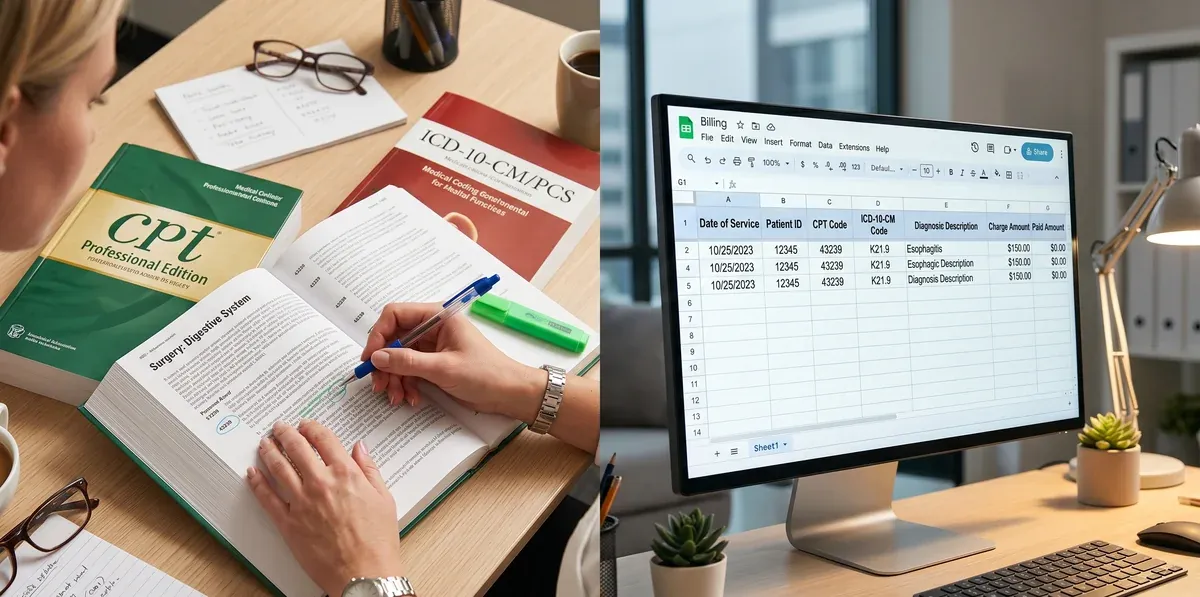
Medical Coding vs Medical Billing: CPC vs CPB : Which Should You Choose?
Medical coding and medical billing are different jobs with different certifications. Here is what each role actually does, what it pays, and which path makes more sense for you in 2026.
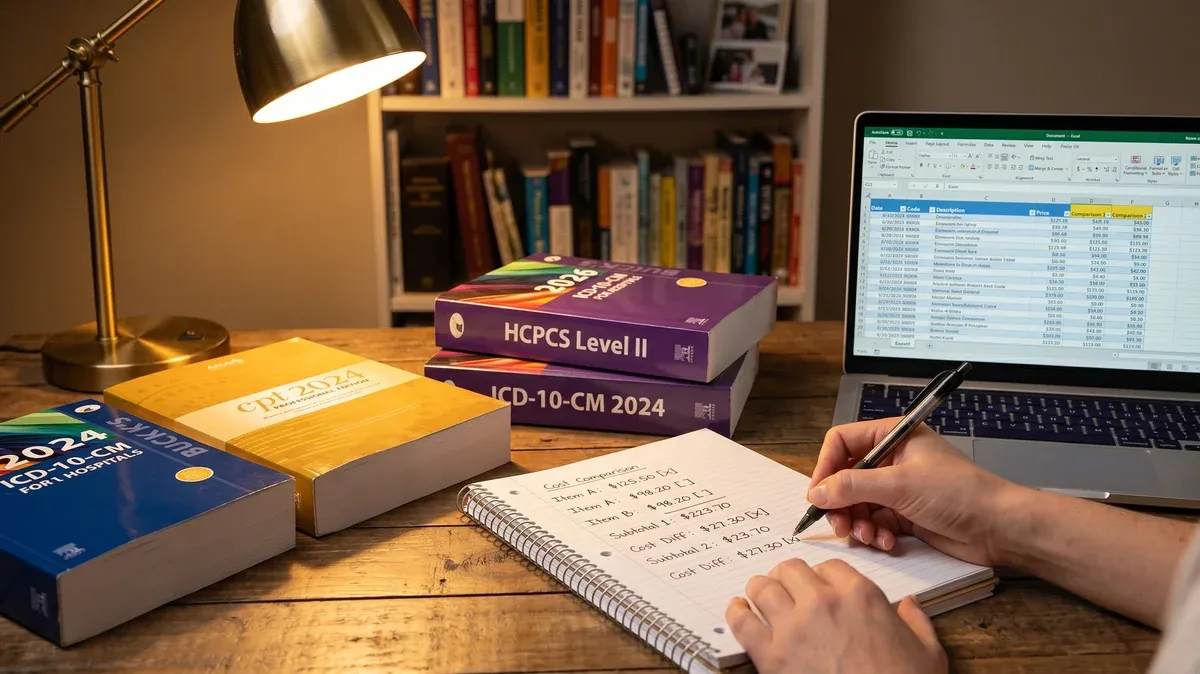
Medical Coding Certification Cost in 2026: True Breakdown (Bootcamp vs Self-Study)
How much does it actually cost to get CPC certified? AAPC membership, exam fees, study tools, and bootcamp costs compared. Plus: the ROI math that makes self-study the obvious choice for most.

Remote Medical Coding Jobs in 2026: Companies Hiring, Salary, and How to Apply
Over 65% of medical coding positions now offer remote options. Here are the companies that hire remote coders, salary benchmarks, and what it takes to land a work-from-home coding role.
Ready to practice?
Test your CPC knowledge with real exam-style questions. Free to start.
Start Blitz Mode