How to Study for the CPC Exam with Kids: Realistic Tips for Busy Parents
By CPCPrep Team ·
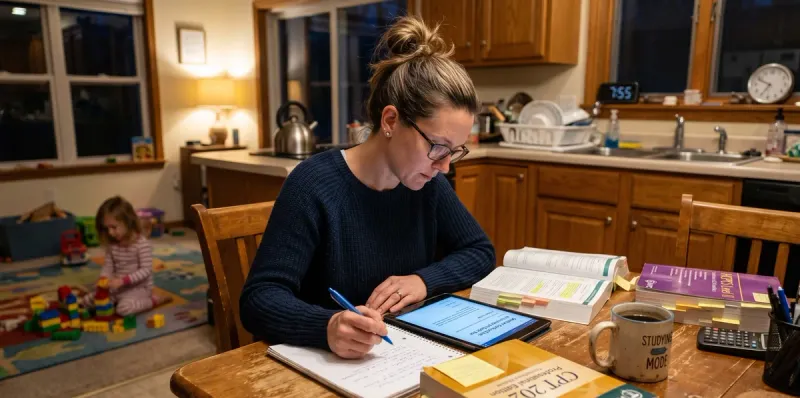
How to Study for the CPC Exam with Kids: Realistic Tips for Busy Parents
The myth of the 4-hour study block
Let’s be real about this: the 4-hour study block is not realistic for most parents. Kids need attention, dinner has to happen, and by 9 PM you are not at full capacity. Most study guides are written for people with uninterrupted afternoons. That is not your situation.
The good news: you do not need long sessions to pass the CPC exam. You need consistent, focused sessions. Fifteen focused minutes beats one hour of distracted reading every time. The research on spaced repetition backs this up, but you probably already knew it from experience.
What actually works for busy parents
The micro-session model (15-30 min)
Here is what actually happens with parents who pass the CPC exam: they study in small chunks distributed across the day. Terminology drills on a phone during a child’s soccer practice. One modifier scenario while dinner cooks. A 20-question set after the kids are in bed.
The constraint is not total hours. It is session startup time. If it takes you 10 minutes to get into study mode, you lose half a 20-minute session before you start. That is why the tools you use matter: anything that requires setup, login, or a loading screen costs you time you do not have.
Anchor to existing habits
You do not need new time. You need to attach study to time that already exists. Coffee in the morning before the house wakes up: 10 minutes. Commute if you are not driving: 20 minutes. Child’s nap if you are home with a younger kid: 25 minutes.
This works because the habit trigger is already there. You are not building a new routine from scratch. You are attaching something new to something that already runs automatically.
Schedule the exam date first
Pick your date before you feel ready. Book it. Pay for it. A hard deadline changes your behavior in a way that “I’ll take it when I’m ready” does not.
Without a date, there is always a reason to push another week. With a paid, scheduled exam, those reasons lose their weight. Work backward from the date and you have your study plan.
A 4-month study plan for busy schedules
This plan assumes 15-25 minutes per day, 5-6 days per week. It builds in buffer for the weeks life gets in the way.
Month 1: Terminology and anatomy. 15 min/day. Blitz-mode flashcard drills. Goal: recognize 80% of the key roots, prefixes, and suffixes by end of month. These appear in every question on the exam, so time spent here pays back across every domain.
Month 2: Coding rules. 20 min/day. E/M guidelines, modifiers, ICD-10-CM conventions. One rule topic per day. Use scenario-based practice to apply what you read. Do not just read the rules: code from them.
Month 3: Timed practice. 25 min/day. Ten questions timed (25 minutes). Review wrong answers immediately after. Weekly: one 30-question set. Focus on answer: then review, not review: then answer.
Month 4: Full mocks and weak domain focus. Two full 100-question mocks scheduled on weekend days. Daily: target the 2-3 domains where your mock scores are lowest. You’ve got this: but only if you prepare the right way.
Tools that resume in seconds (no setup time)
Here’s where it gets practical: the tools you use for 20-minute sessions need to open fast, pick up where you left off, and work on a phone.
CPCPrep is a PWA: no install, opens from a browser bookmark, resumes your session automatically. Blitz mode takes 60 seconds for 10 terms. Sniper mode is one scenario, about 3 minutes. No login required for the free tier.
Other options: Quizlet for terminology sets (fast on mobile), the AAPC practice question bank for structured content (requires login, better for longer sessions at a desktop).
Don’t overthink it. Look at the scenario as it’s presented. If a tool requires more than 10 seconds to get started, it is not built for your situation.
The mental game: staying consistent without burning out
Plan on having some unanswered questions: don’t freak out. You will have weeks where you study less than planned. Kids get sick. Work gets busy. One low-output week does not undo four months of prep.
The 4-month plan is built with buffer. Missing a week means picking up where you left off, not starting over. The cumulative effect of consistent micro-sessions is real: terminology you drilled in month 1 is still there in month 4, because you practiced it repeatedly in short bursts.
It takes time, but it is well worth it. Parents who earn the CPC certification on the first attempt tend to describe the same pattern: slow start, steady middle, strong final month once the exam date is locked.
Focus on the principles. That’s really what they’re testing. Not memorization. Not code lookup. The judgment to apply the right rule to a scenario you have not seen before.
Start today: 10-term Blitz drill, no account needed, under 2 minutes.
Related: CPC Exam Study Strategy | CPC Exam Prep Guide | Free CPC Practice Test | Medical Coding Terminology | CPC Mock Exam Guide | CPC Exam Pass Rate
Sources & References
Frequently Asked Questions
How to pass the CPC exam when you're busy? ▼
Break study into 15-30 minute daily sessions instead of long blocks. Anchor sessions to existing habits (commute, lunch, after kids are in bed). Schedule your exam date early to create a hard deadline.
How many people fail the CPC exam the first time? ▼
Approximately 35-50% of first-time candidates do not pass. Most who fail once pass on their second attempt with targeted preparation on weak domains.
Can you be self-taught to pass the CPC exam? ▼
Yes. Many successful coders are self-taught. You need the official codebooks, a solid study guide or prep tool, and disciplined timed practice. A formal program adds structure but is not required.
What should I study first for the CPC exam? ▼
Start with medical terminology and anatomy (weeks 1-4). These appear in every question and are the fastest wins. Then move to E/M guidelines, modifiers, and ICD-10-CM conventions.
Test Your Knowledge
5 quick questions on this topic.
Related Articles
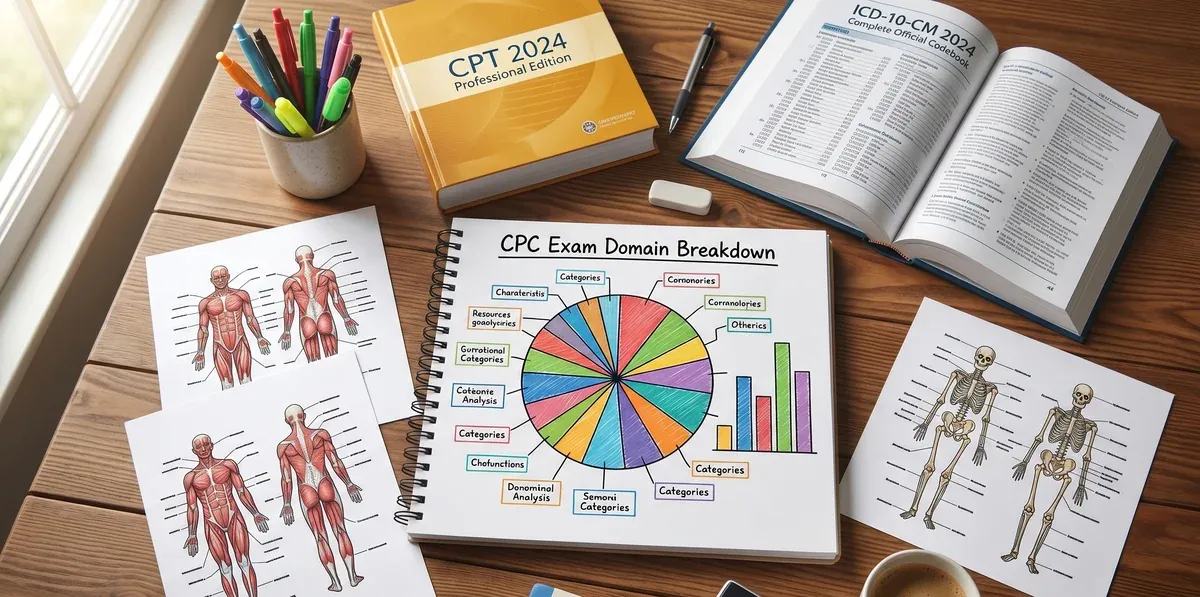
CPC Exam Body Systems: All 17 Domains Explained (2026 Study Priority Guide)
The CPC exam covers 17 medical coding domains. Here is which body systems carry the most questions, how to prioritize your study time, and what the exam actually tests in each section.
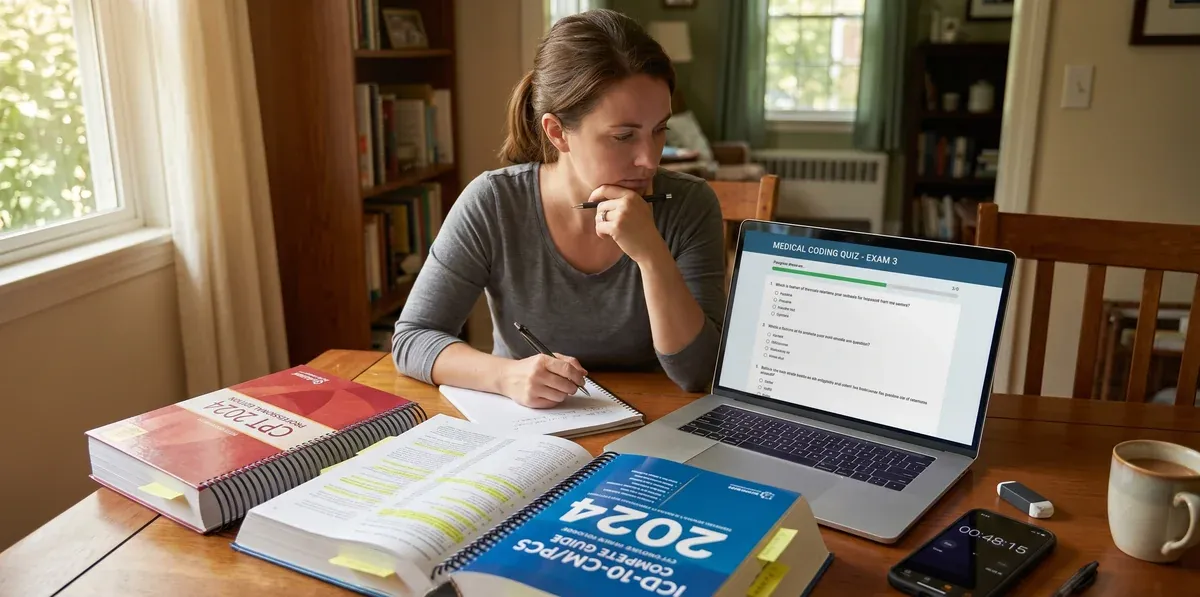
CPC Mock Exam Guide: How to Use Practice Exams to Pass on Your First Try
Taking a CPC mock exam is not the same as being ready for one. Here is how to run your mock exams to actually prepare: timing, review strategy, score interpretation, and when you are ready.

CPC Exam Pass Rate 2026: Is It Hard? Real Statistics and How to Prepare
AAPC does not publish an official CPC exam pass rate. Here is what the medical coding community actually says, plus the factors that separate candidates who pass from those who do not.
Ready to practice?
Test your CPC knowledge with real exam-style questions. Free to start.
Start Blitz Mode